

Final conference of the Transcending Barriers project, 25 November 2026, European Economic and Social Committee, Brussels Many employers across Europe now say they’re committed to workplace inclusion. For many trans people, though, the barriers are still there: in hiring, at work every day and when trying to move up. So how do we turn commitment
Tag Archive: Workplace inclusion

On 22 October, the conference “A Bridge to Work for LGBTI+ People” was broadcast from Vilnius. It concluded “Connecting the Dots”, a two-year EU co-funded project, yet its main message was not about endings. It was about the fact that a bridge to work has to rest on solid economic and social foundations. Monday morning
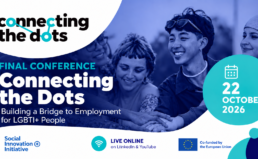
On 22 October 2026, the Connecting the Dots project brings its two years of work to a close with a final conference streamed live on LinkedIn and YouTube. The day is called “Building a Bridge to Employment for LGBTI+ People”. It will show what can happen when LGBTI+ organisations, employment services and inclusive employers start

Mark your calendar. On 22 October 2026, LGL and our partners bring the Connecting the Dots project to a close with a hybrid final event, streamed live on LinkedIn, and you’re invited! Over the past two years, Connecting the Dots has worked to open doors to meaningful employment for LGBTI+ people in Lithuania and Bulgaria

Breaking Down Workplace Barriers Through Authentic Voices and Actionable Change The workplace should be a space where everyone can thrive authentically. Yet for many trans and non-binary individuals across Europe, simply being themselves at work remains a daily challenge fraught with risks of discrimination, exclusion, and career limitations. A groundbreaking new European initiative, “Transcending Barriers:

“Direction: Employment” is an innovative training program for vulnerable young people, which enhances their employability in competitive, high-technology industries and the IT sector. The project aims to unleash the potential of NEET young people from vulnerable groups, and increase their employability by providing a market-specific IT training program in Bulgaria, Lithuania, Italy, Slovenia and Portugal.