
The international LGBTQ+ festival Lithuanian Pride returns to Vilnius from June 2–6, 2026, bringing a week of events focused on visibility, rights, and equality.
Organized by the National LGBT rights organization LGL, the festival will culminate on June 6 with its main event — the “March for Equality!” parade. This year, participants aim to deliver a clear message to political leaders: all families in Lithuania deserve recognition and protection.
A direct message to politicians
Organizers say the march is intended as a firm response to politicians seeking to narrow the constitutional definition of family and promote policies that negatively affect LGBTQ+ people. They also highlight the slow progress in implementing the EU’s LGBTIQ Equality Strategy in Lithuania.
According to LGL Executive Director Vladimir Simonko, the event will serve as a reminder that while courts in Lithuania have already begun registering same-sex partnerships, comprehensive legislation remains stalled.
He notes that political inaction — and in some cases, efforts to roll back legal recognition — continues to leave Lithuania behind its Baltic neighbors in ensuring equal rights for same-sex families.
Updated route and event details
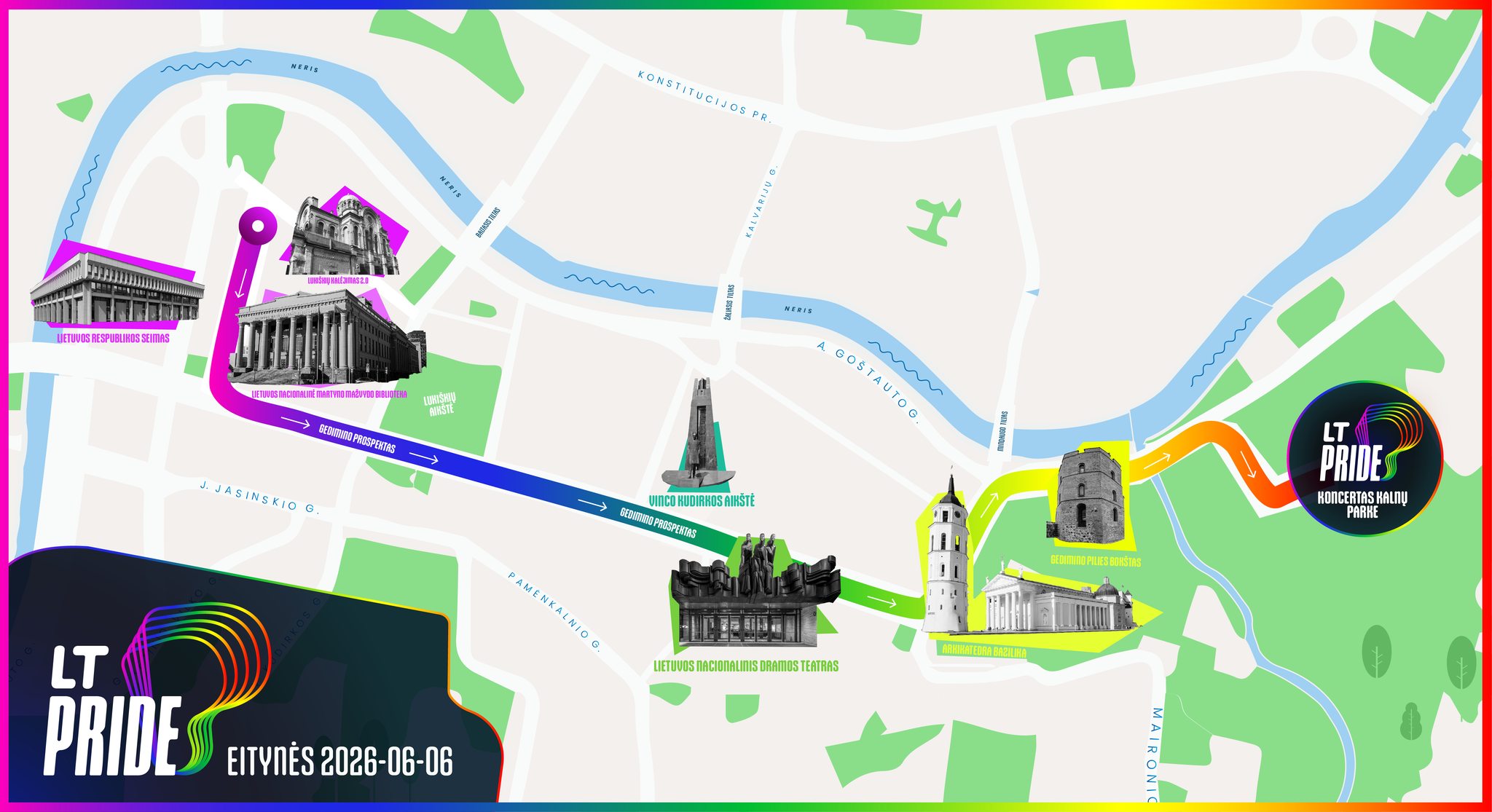
This year, the march route will change slightly. Participants will gather at 12:00 near the Martynas Mažvydas National Library of Lithuania and proceed along Gediminas Avenue toward Kalnų Park.
The march will conclude with a free concert at 17:00, featuring performers from Lithuania and abroad.
The public is invited to join under the slogan “For Family Equality.” Larger groups (10 and more people) are encouraged to register in advance via the festival’s official website.
Conference to tackle “rainbow family” rights
On June 5, Vilnius City Municipality will host an international conference titled “Rainbow Families: Towards Legal, Social, and Institutional Equality.”
The event will bring together experts and policymakers from the Nordic and Baltic regions, as well as Ukraine, to discuss challenges faced by same-sex couples. Topics will include the lack of legal recognition, as well as barriers to accessing education and healthcare services.